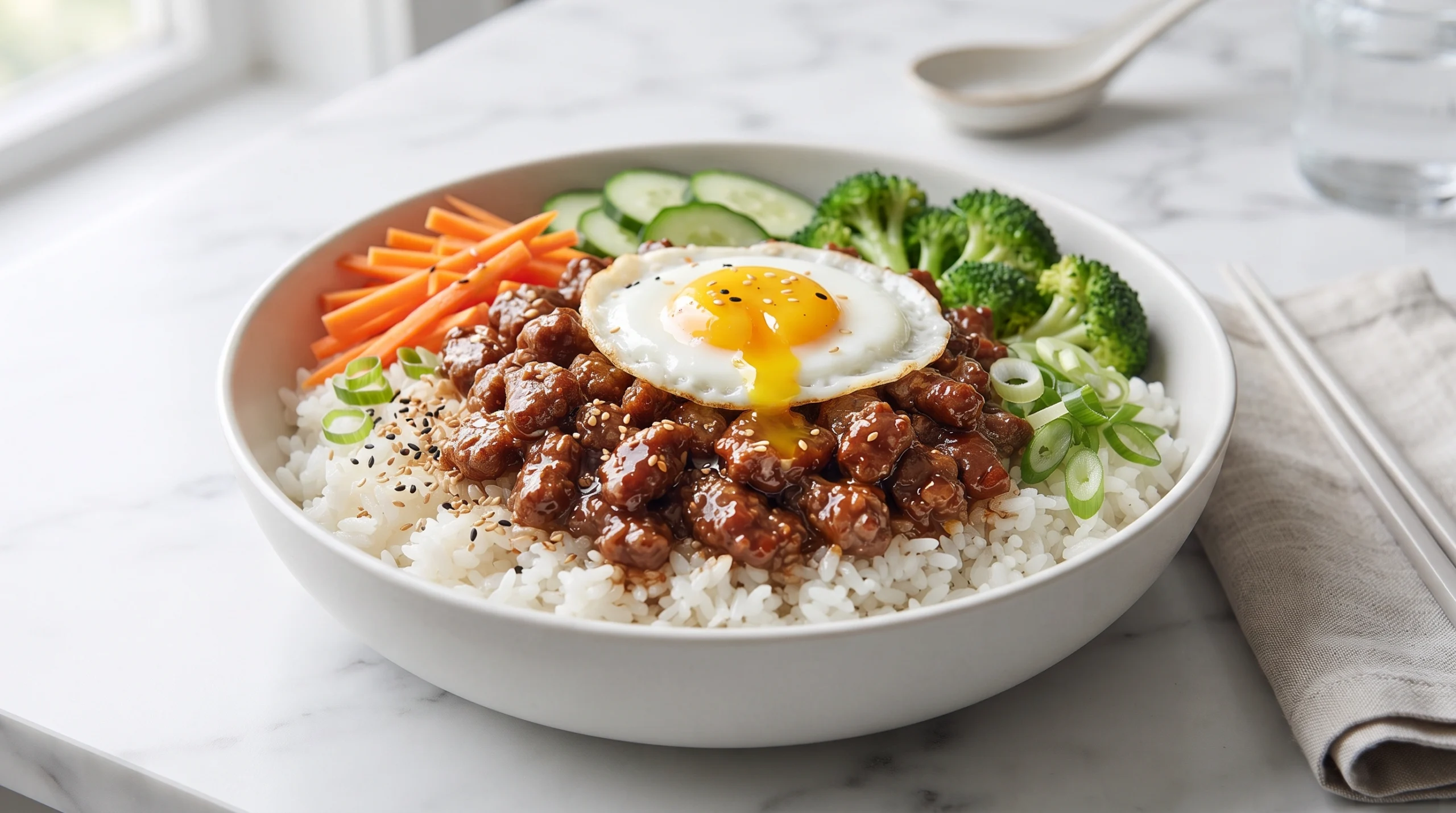
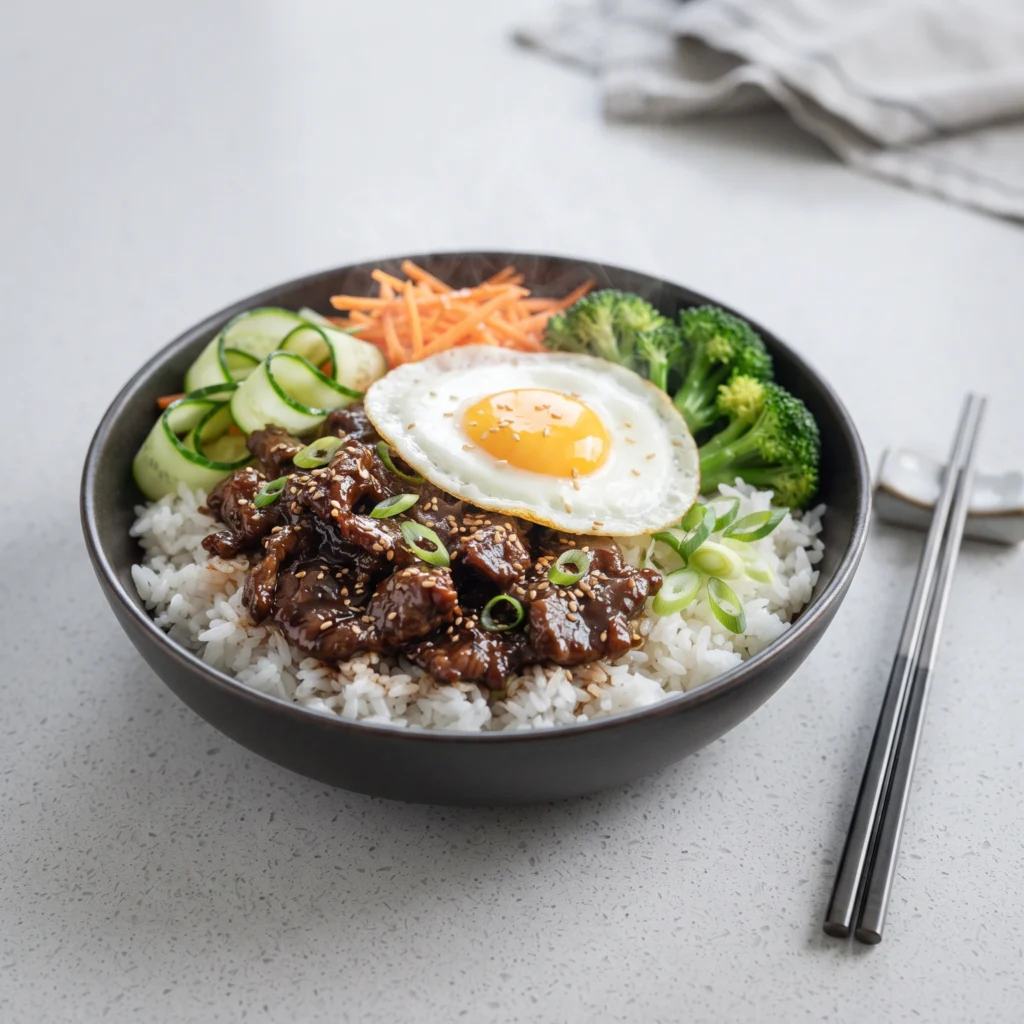
A Korean beef rice bowl is a simple way to enjoy bold Korean-inspired flavors at home. Tender ground beef cooked with garlic, soy sauce, sesame oil, and a touch of sweetness is served over fluffy rice with fresh vegetables for a satisfying meal.
This easy bowl combines the best parts of comfort food and international cooking. It comes together quickly, uses affordable ingredients, and creates a restaurant-style meal perfect for busy weeknights or meal prep.
Why This Recipe Works
It creates big flavor with simple ingredients. Garlic, soy sauce, ginger, and sesame oil transform basic ground beef into a flavorful Korean-inspired dish.
It is quick and practical. Using ground beef means this recipe cooks faster than many traditional Korean beef dishes.
It is balanced and filling. Rice provides energy, beef adds protein, and vegetables bring freshness and texture.
It works perfectly for meal prep. The beef mixture reheats well, making it a great option for preparing lunches ahead.
For another flavorful rice-based meal, try this High Protein Chicken Rice Bowl for another satisfying bowl idea.
Ingredients You’ll Need
For the Korean Beef
- 1½ pounds ground beef
- 1 tablespoon sesame oil
- 3 cloves garlic, minced
- 1 tablespoon fresh ginger, grated
- ¼ cup soy sauce
- 2 tablespoons brown sugar or honey
- 1 tablespoon rice vinegar
- 1 tablespoon gochujang (Korean chili paste)
- ½ teaspoon black pepper
- 2 green onions, sliced
- 1 tablespoon sesame seeds
For the Rice Bowls
- 3 cups cooked white rice
- 1 cup shredded carrots
- 1 cup cucumber slices
- 1 cup steamed broccoli
- 2 fried eggs (optional)
- Extra green onions for topping
Ingredient Notes & Substitutions
Ground beef: Use lean ground beef for a lighter bowl, or regular ground beef for richer flavor.
Gochujang: This Korean chili paste gives the dish its signature sweet-spicy flavor. Reduce or replace it with sriracha if needed.
Rice: White rice is traditional, but brown rice or cauliflower rice can also work.
Vegetables: Carrots and cucumber add freshness, but cabbage, spinach, or edamame are great additions.
Soy sauce: Use low-sodium soy sauce if you want better control over salt levels.
Protein: Ground turkey or chicken can replace beef for a lighter version.
Step-by-Step Instructions
1. Prepare the sauce
In a small bowl, mix soy sauce, brown sugar, rice vinegar, gochujang, garlic, ginger, and black pepper.
Stir until the sugar is mostly dissolved.
2. Cook the beef
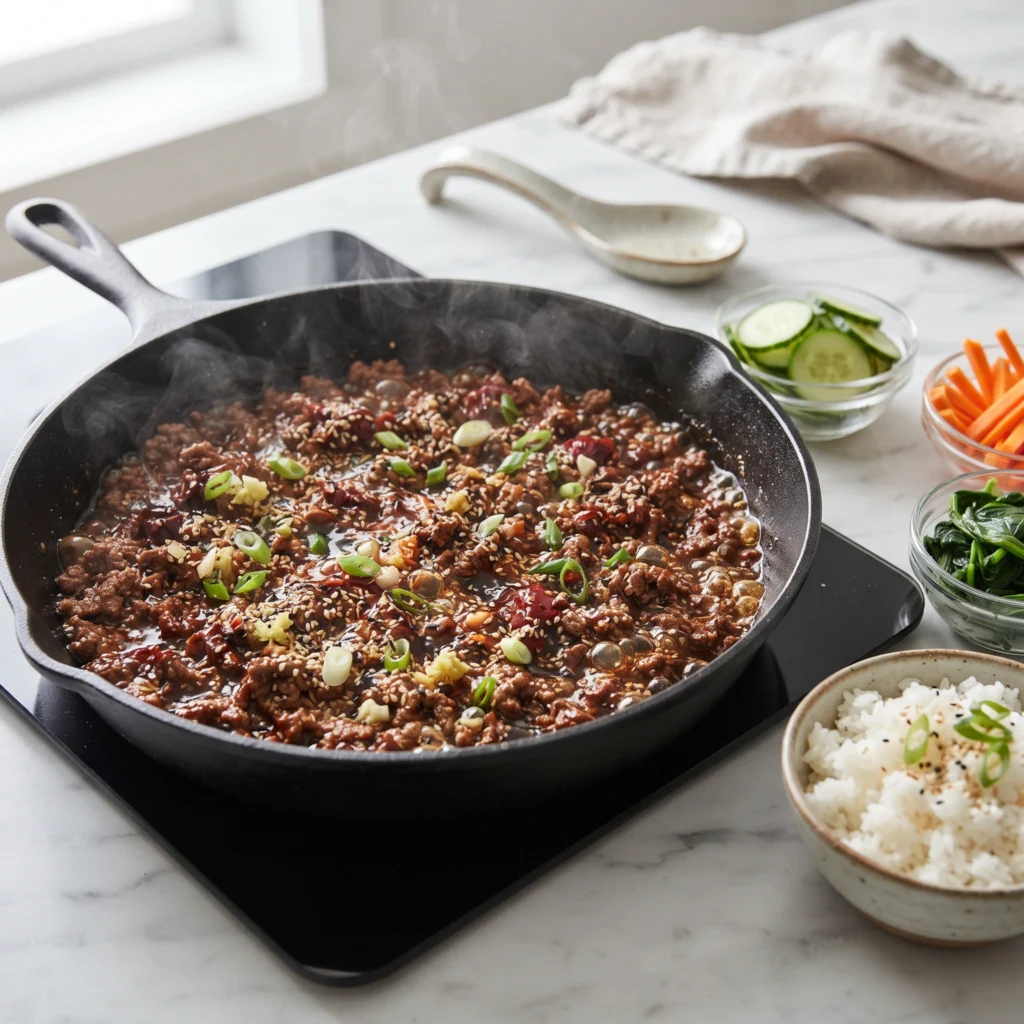
Heat sesame oil in a large skillet over medium-high heat.
Add ground beef and cook until browned, breaking it apart as it cooks.
Drain excess fat if needed.
3. Add the Korean flavors
Pour the sauce over the cooked beef.
Stir well and cook for 2–3 minutes until the beef absorbs the flavors and becomes glossy.
Finish with sliced green onions and sesame seeds.
4. Prepare the bowl ingredients
Cook the rice and prepare the vegetables.
Slice cucumbers and shred carrots while the beef finishes cooking.
5. Assemble the bowls
Add rice as the base.
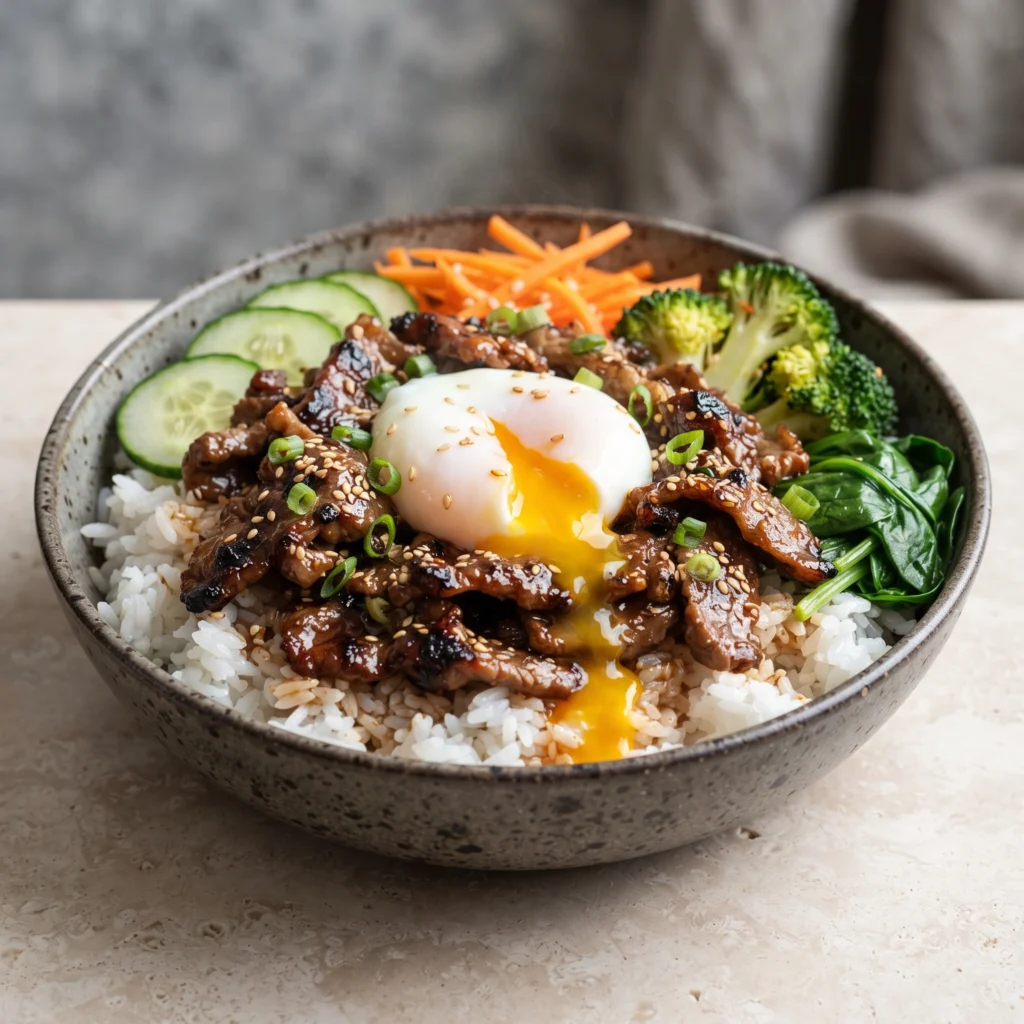
Top with Korean beef, vegetables, and optional fried egg.
Finish with extra sesame seeds and green onions.
Serve warm.
Pro Tips
- Toast sesame seeds lightly for a deeper nutty flavor.
- Let the beef simmer briefly in the sauce so it absorbs more flavor.
- Prepare rice in advance for faster weekday meals.
- Add fresh vegetables right before serving for better texture.
- Use a hot pan to create better browning on the beef.
Common Mistakes to Avoid
Adding the sauce too early
The beef needs time to brown first. Adding sauce too soon can prevent proper caramelization.
Using too much gochujang
Gochujang has a strong flavor. Start with a smaller amount and adjust to your spice preference.
Skipping fresh toppings
Green onions, sesame seeds, and vegetables add freshness that balances the rich beef.
Storage & Make-Ahead Tips
Store the cooked Korean beef separately from rice and vegetables for the best results.
The beef will keep in an airtight container in the refrigerator for up to 4 days.
Reheat the beef and rice gently before adding fresh vegetables.
You can also freeze the cooked beef mixture for up to 3 months.
For another international meal-prep option, try this Japanese Teriyaki Chicken Bento Bowl for another Asian-inspired recipe.
Serving Suggestions
- Top with a fried egg for extra protein.
- Add kimchi for authentic Korean-inspired flavor.
- Serve with extra cucumber for freshness.
- Add spicy mayo for a creamy topping.
- Pair with a light drink like Iced Green Tea Lemon.
Variations to Try
Korean Chicken Rice Bowl
Replace beef with ground chicken or diced chicken breast for a lighter version.
Vegetarian Korean Bowl
Use mushrooms, tofu, or extra vegetables instead of beef.
Spicy Korean Beef Bowl
Increase gochujang and add chili flakes for a stronger spicy flavor.
Frequently Asked Questions
What is a Korean beef rice bowl?
It is a bowl made with seasoned beef served over rice with vegetables and Korean-inspired sauces.
Can I make this recipe less spicy?
Yes. Reduce the gochujang or replace it with a milder sauce for less heat.
What rice is best for Korean beef bowls?
Short-grain or white rice works well, but jasmine rice is also a great option.
Final Thoughts
This Korean beef rice bowl is proof that simple ingredients can create exciting international flavors. The savory beef, fluffy rice, fresh vegetables, and sweet-spicy sauce make every bite satisfying.
It is an easy recipe to add variety to your weekly meals while keeping preparation simple and budget-friendly. Whether you make it for dinner or meal prep, this bowl delivers bold flavor with minimal effort.
Find more in Budget Meals