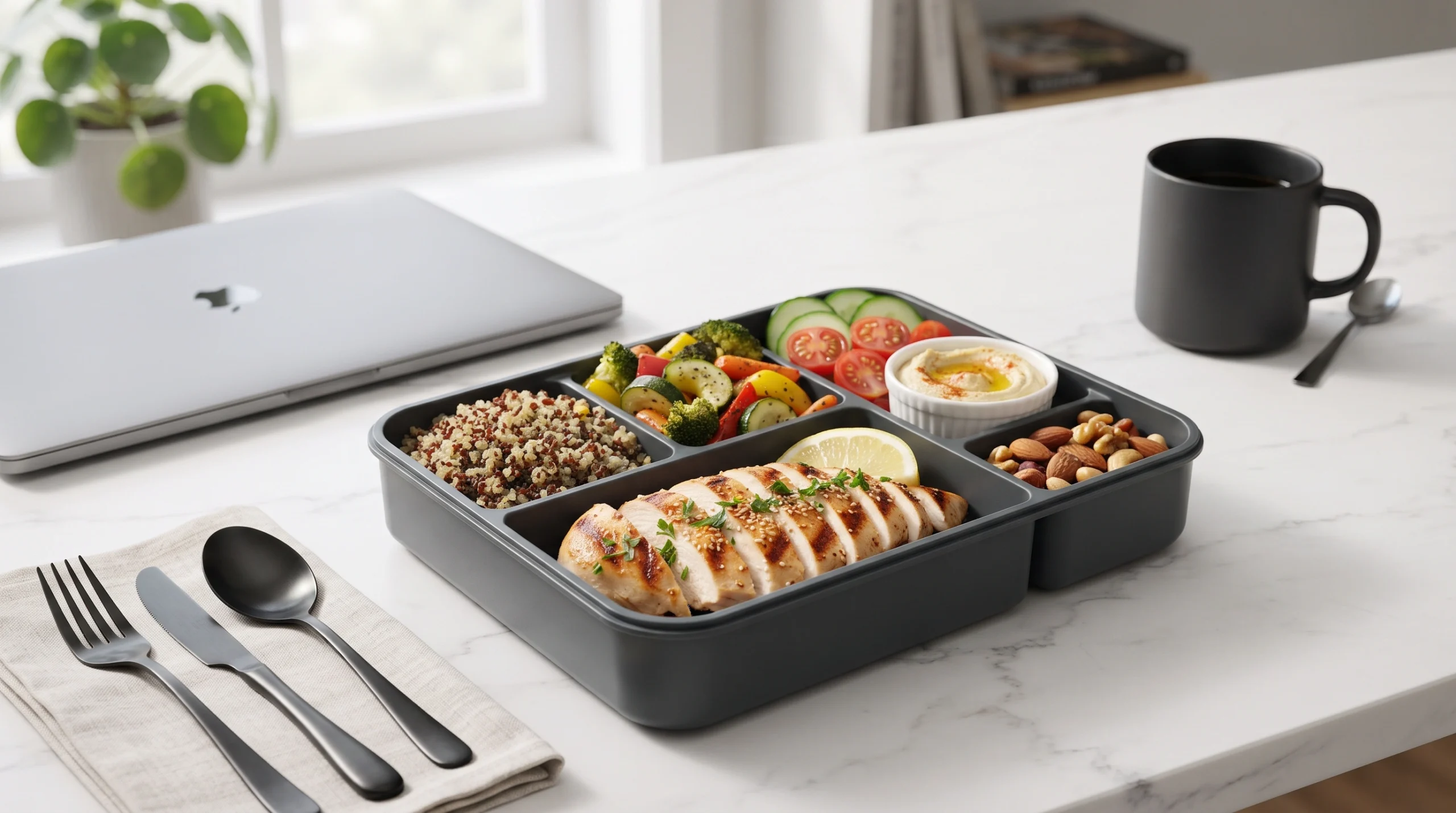
There’s a strange stigma around adults using a lunch box, like it’s something you’re supposed to outgrow once you leave school. I never understood that. A good lunch box is genuinely one of the most useful tools for actually eating well on a busy weekday — it forces portioning, it keeps food fresh, and it means you’re not standing in front of the fridge at noon making decisions on an empty stomach, which is how most bad lunch choices happen in the first place.
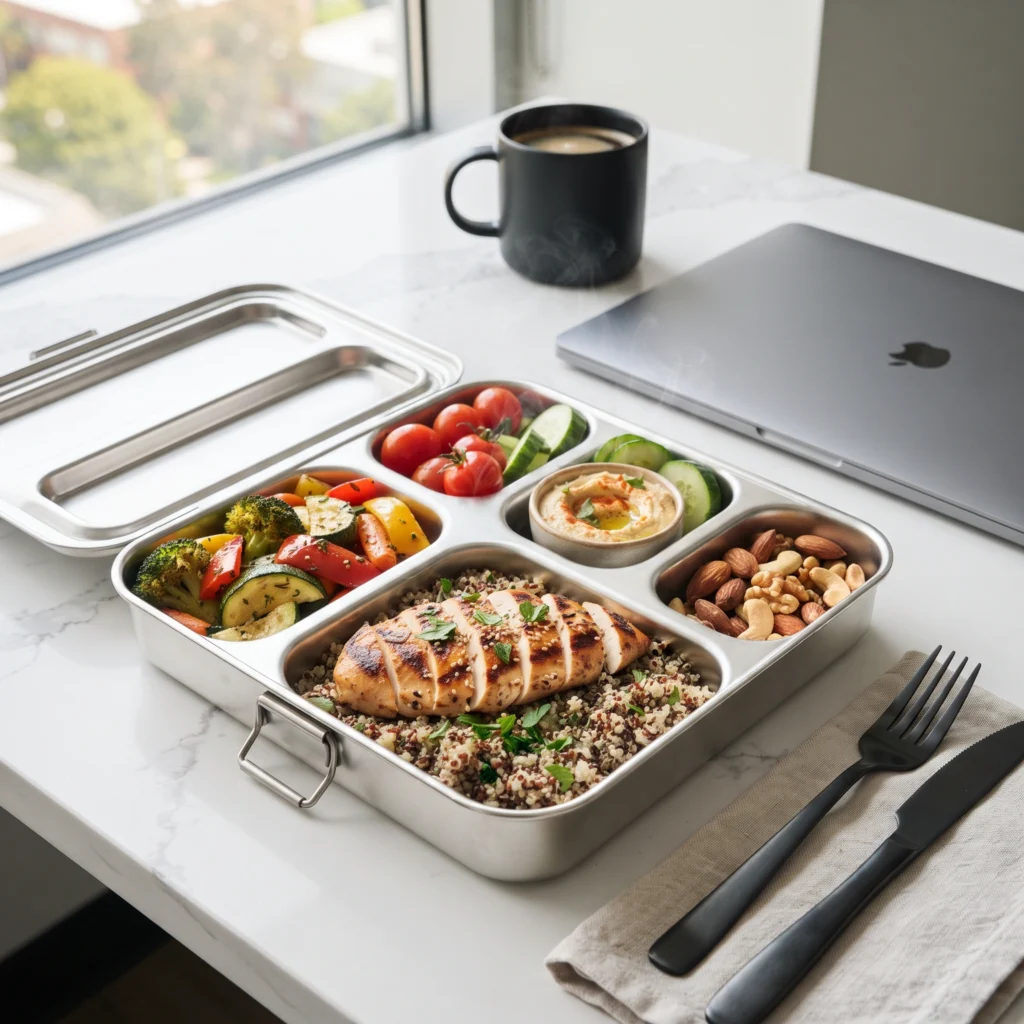
This is the lunch box formula I default to on weeks when things are chaotic — back-to-back meetings, no real break, barely enough time to eat standing up. It’s built around a simple, repeatable structure: a lean protein, a complex carb, a vegetable, and a snack-sized extra for when the afternoon slump hits. No fancy technique required, just good planning on a Sunday that pays off for the rest of the week.
Why This Recipe Works
It’s built around a repeatable formula, not a single recipe. Once you understand the structure — protein, carb, vegetable, extra — you can rotate ingredients endlessly without ever getting bored or needing to follow a rigid recipe every single week.
It keeps protein high without requiring much cooking skill. Grilled chicken, a can of tuna, or pre-cooked shrimp all work here. This isn’t about complicated technique, it’s about consistency and having the right ingredients on hand.
It’s designed for people with genuinely no time. Every component reheats cleanly or is eaten cold, nothing requires last-minute prep, and the whole thing can be assembled from prepped components in under five minutes on a busy morning.
It prevents the mid-afternoon crash. A solid protein-to-carb ratio, plus a fiber-rich vegetable, keeps blood sugar steadier through the afternoon than a carb-heavy lunch typically does, which matters a lot when you’ve got a full day ahead with no room for an energy dip.
Ingredients You’ll Need
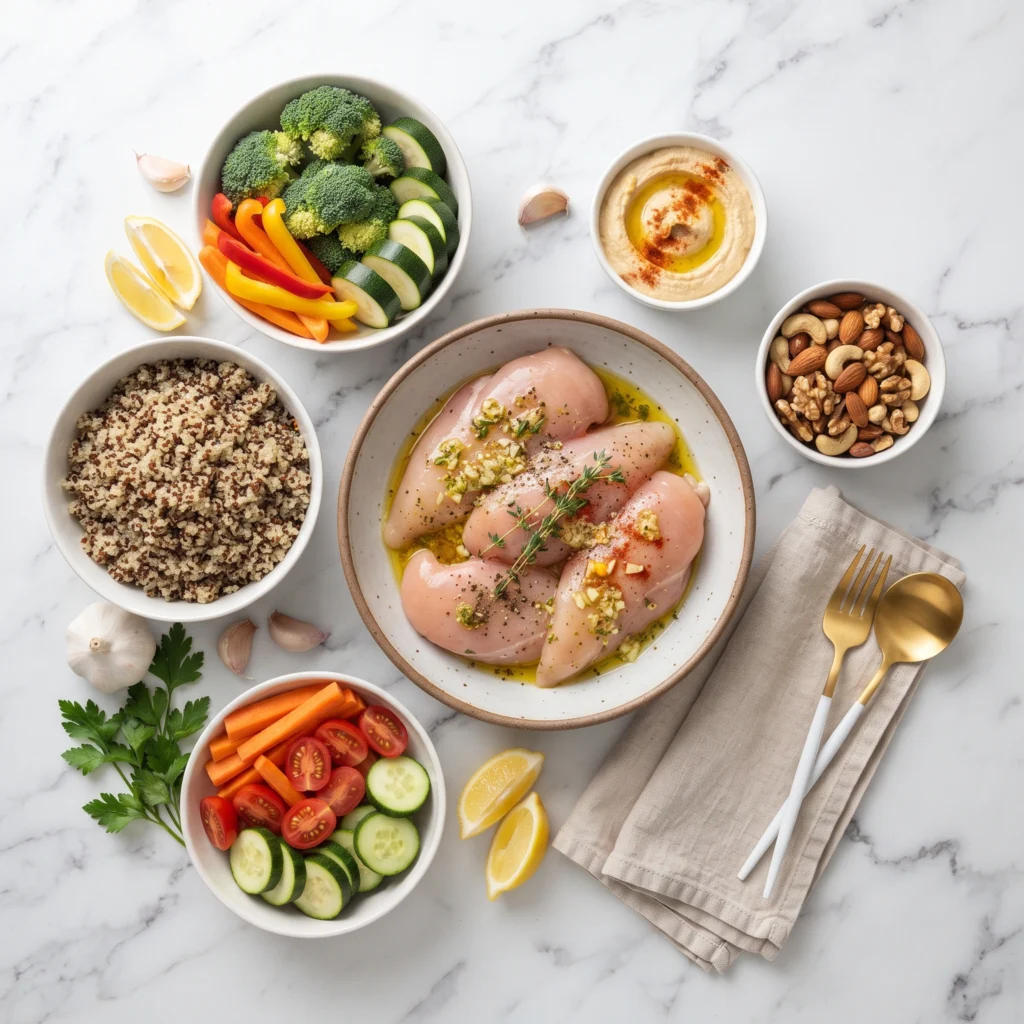
For the protein (choose one, makes 4 servings):
- 1½ pounds boneless, skinless chicken breast, or
- 4 (5-ounce) cans of tuna in water, drained, or
- 1 pound cooked, peeled shrimp
For the chicken marinade (if using chicken):
- 2 tablespoons olive oil
- Juice of 1 lemon
- 2 cloves garlic, minced
- 1 teaspoon dried oregano
- ½ teaspoon salt
- ¼ teaspoon black pepper
For the lunch box (per serving):
- ¾ cup cooked quinoa or brown rice
- 1 cup roasted vegetables (broccoli, bell pepper, zucchini, or a mix)
- ¼ cup hummus or Greek yogurt-based dip
- A handful of cherry tomatoes or cucumber slices
- 1 tablespoon everything bagel seasoning or a squeeze of lemon, for finishing
For the snack extra (choose one per box):
- ¼ cup mixed nuts
- 1 hard-boiled egg
- 1 small container of Greek yogurt
- A handful of roasted chickpeas
Ingredient Notes and Substitutions
- Protein choice: Chicken gives you the most flavor control since you’re seasoning it yourself, but canned tuna is genuinely the fastest option if you’re truly pressed for time on prep day — no cooking required at all. Shrimp cooks in just a few minutes and is a nice change of pace if you’re getting tired of chicken.
- Carb swaps: Quinoa adds a small protein boost on top of your main protein source. Brown rice is more neutral and budget-friendly. Farro or barley both work well too if you want more chew and fiber.
- Vegetable flexibility: Nearly any roastable vegetable works here — sweet potato, asparagus, Brussels sprouts, or green beans are all good options depending on the season and what’s on sale.
- Dip options: Hummus adds healthy fats and fiber; a Greek yogurt-based dip (mixed with herbs, lemon, and garlic) adds extra protein with fewer calories. Either works well as a dip for the vegetables or a spread if you’re eating this alongside bread or crackers.
- Snack extra: This is meant to bridge the gap between lunch and dinner. Nuts and hard-boiled eggs travel well without refrigeration for a few hours; yogurt needs to stay cold.
Step-by-Step Instructions
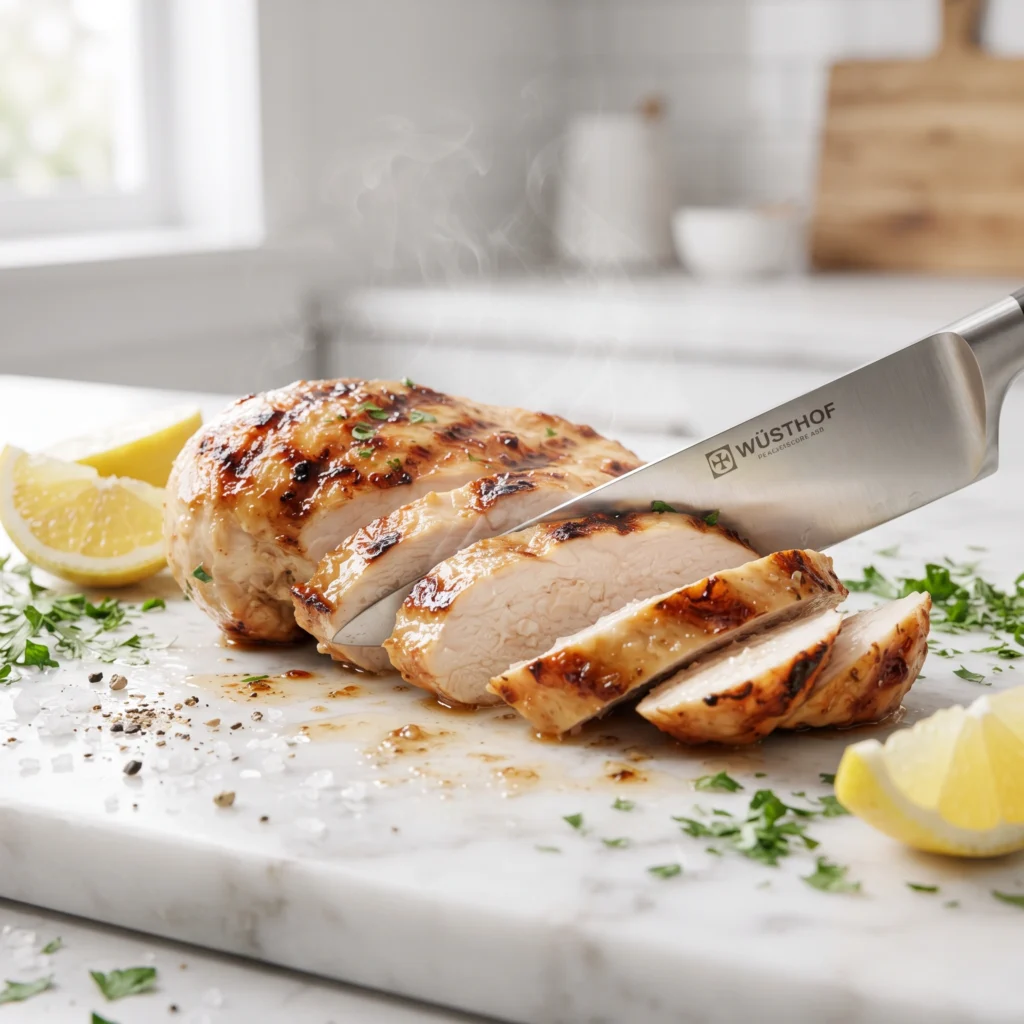
1. Prep your protein. If using chicken, combine the olive oil, lemon juice, garlic, oregano, salt, and pepper, marinate the chicken for at least 20 minutes, then cook in a skillet over medium-high heat for 5-6 minutes per side until it reaches 165°F. Let it rest, then slice. If using tuna, simply drain and portion. If using shrimp, cook in a hot skillet for 2-3 minutes per side until pink and opaque.
2. Cook the quinoa or rice. Prepare according to package instructions, then let it cool slightly before portioning into containers.
3. Roast the vegetables. Toss your chosen vegetables with a little olive oil, salt, and pepper, and roast at 425°F for 15-20 minutes, until tender and lightly caramelized.
4. Prep the fresh elements. Halve the cherry tomatoes or slice the cucumber, and portion the hummus or yogurt dip into small containers.
5. Assemble the lunch boxes. Divide the quinoa, protein, roasted vegetables, and fresh vegetables among your lunch box compartments. Add a small container of dip and your chosen snack extra on the side. Finish with everything bagel seasoning or a squeeze of lemon just before eating.
Pro Tips for Making This Work on Busy Weeks
- Batch cook everything on one day. Set aside 45 minutes on a Sunday to cook all your protein, grains, and roasted vegetables at once. From there, assembly each morning takes minutes, not effort.
- Keep dips and dressings in small separate containers. This is the single easiest way to prevent everything from getting soggy by the time you actually eat lunch.
- Pack your snack extra the night before, not the morning of. Decision fatigue is real on busy mornings — having everything already assembled removes one more thing to think about before you’re out the door.
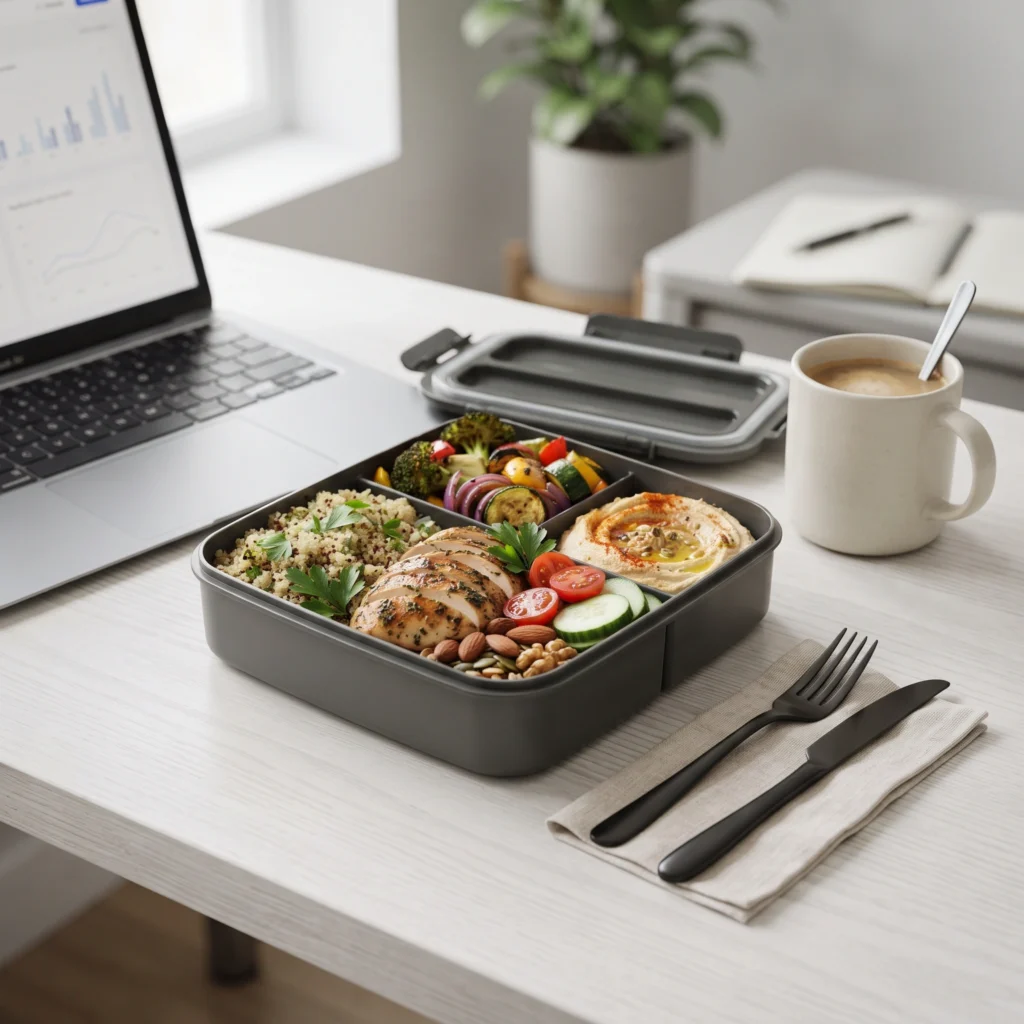
- Use a lunch box with real compartments, not just a single container. It genuinely changes how appetizing the food feels by the time you open it at your desk.
Common Mistakes to Avoid
- Under-seasoning the protein. A bland piece of chicken or plain drained tuna gets old fast. A quick marinade or a squeeze of lemon and some seasoning right before eating makes a real difference.
- Packing hot food directly into a sealed container. This traps steam and speeds up sogginess. Let everything cool for 15-20 minutes before sealing the lunch box.
- Relying on only one protein source all week. Rotating between chicken, tuna, and shrimp (or whatever your preferred proteins are) keeps things from feeling repetitive and helps you actually stick with the routine.
- Skipping the snack extra. Without something to bridge the gap to dinner, it’s easy to reach for vending machine snacks mid-afternoon, which undoes a lot of the planning that went into the lunch itself.
Storage and Make-Ahead Tips
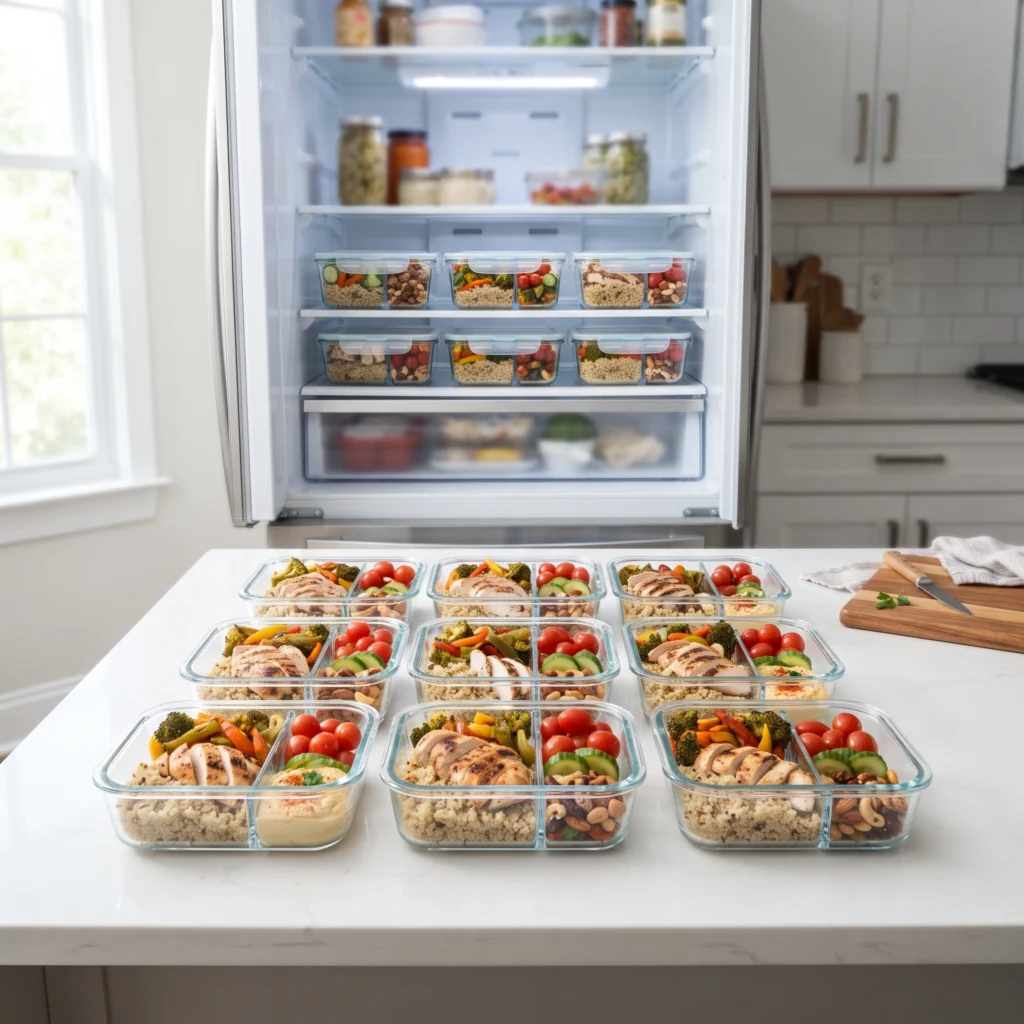
This lunch box formula is genuinely built around a full week of prep. Cooked chicken keeps in the fridge for up to 4 days, or can be frozen for up to 2 months. Cooked quinoa or rice holds well for up to 5 days. Roasted vegetables keep for about 3-4 days before they start to lose their texture. Canned tuna, once opened and portioned, should be eaten within 2 days for the best quality.
For the smoothest week, batch cook on Sunday, portion everything into individual containers immediately, and assemble the actual lunch boxes each morning or the night before — this keeps everything at peak freshness rather than sitting fully combined for days.
Serving Suggestions
- As a complete grab-and-go lunch for the office or a busy work-from-home day
- With a piece of fruit on the side for a bit of natural sweetness to round out the meal
- Paired with sparkling water or unsweetened iced tea to keep things light through the afternoon
- Reheated for a quick dinner on nights when you don’t have energy to cook something new
- Split into two smaller portions if you prefer a lighter lunch and an afternoon snack instead of one larger meal
Variations to Try
- Mediterranean version: Use chicken, swap the dip for tzatziki, and add kalamata olives and feta to the vegetable portion.
- Southwest version: Swap the quinoa for a black bean and corn mix, use a chipotle yogurt dip, and add sliced avocado.
- Low-carb version: Skip the grain entirely and double the roasted vegetables, or swap in cauliflower rice.
- Vegetarian version: Swap the animal protein for baked tofu or a double portion of chickpeas for a fully plant-based, high-protein lunch box.
- Higher-calorie version: For anyone with higher energy needs (athletes, physically demanding jobs), add extra olive oil to the dressing, a larger grain portion, or an additional snack extra like nut butter and crackers.
Frequently Asked Questions
How much protein does this lunch box actually provide? Depending on your protein choice and portion size, you’re looking at roughly 35-45 grams of protein per box, plus additional protein from the snack extra if you choose eggs or yogurt.
Can I meal prep this for a full five-day work week? Yes — this recipe is specifically designed for that. Batch cook everything on a Sunday, portion it into containers, and you’ll have lunch covered through Friday with minimal daily effort.
What’s the best lunch box to use for this? A compartmentalized container, whether glass or BPA-free plastic, works best since it keeps the protein, grain, and vegetables physically separated and prevents everything from getting soggy.
Can I eat this cold, or does it need to be reheated? Both work. The chicken and quinoa are good reheated, but the whole box is also perfectly enjoyable cold if you don’t have microwave access at work.
Is this a good option for weight management goals? The higher protein and fiber content tends to keep people fuller longer, which can support weight management goals, though overall results depend on total daily intake and other factors beyond any single meal.
Final Thoughts
The real value of this lunch box isn’t any single ingredient, it’s the structure. Once protein, carb, vegetable, and snack extra become a habit rather than a decision you have to make fresh every single day, staying consistent through a genuinely busy week gets a lot easier. A little bit of Sunday effort buys you five days of not having to think about lunch at all — which, on the busiest weeks, might be the most valuable thing this recipe actually does.
Find more in high-protein