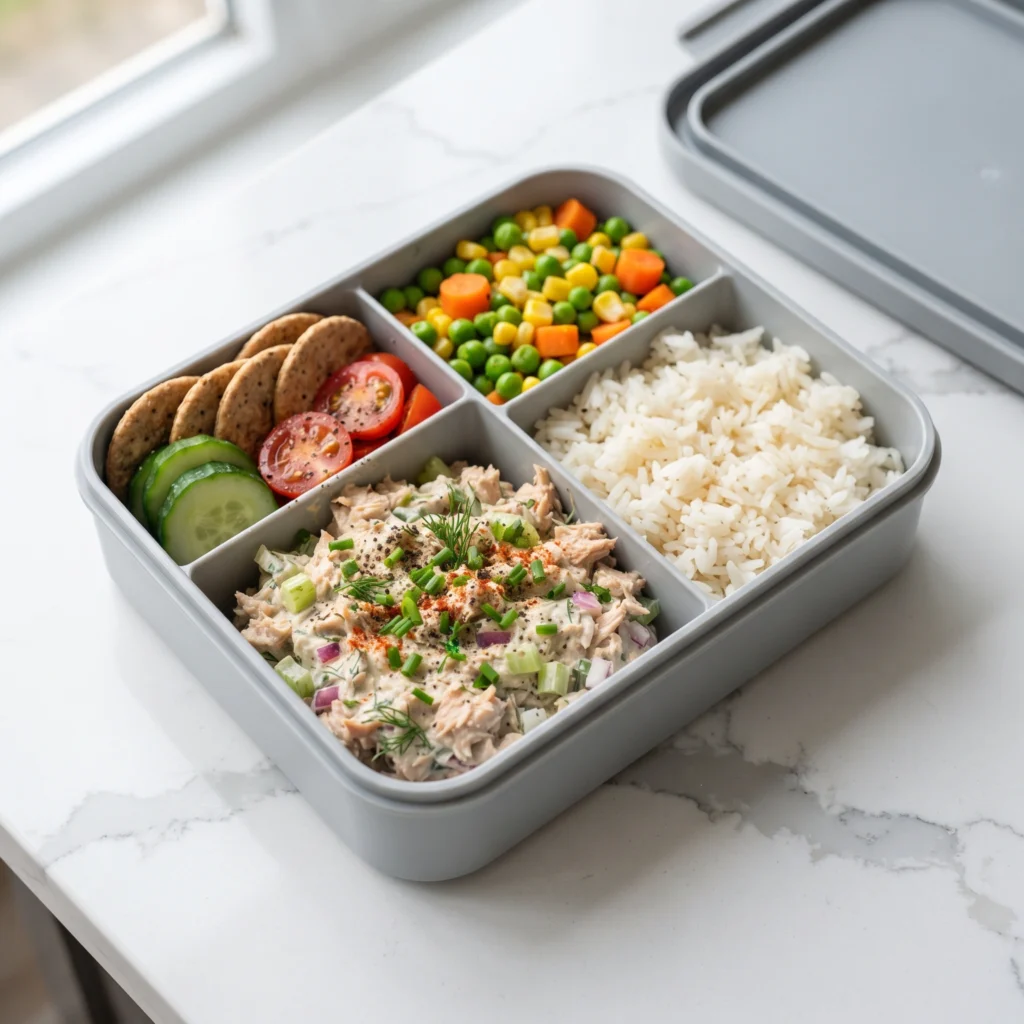
Canned tuna doesn’t get nearly enough credit as a meal-prep ingredient. It’s shelf-stable, it’s one of the cheapest proteins per gram you can buy, and it requires zero cooking — which means on the weeks when even batch-cooking chicken feels like too much effort, tuna is the thing that keeps lunch on track without any real work. This bento box turns a few cans of tuna into a genuinely satisfying, well-rounded lunch for well under the cost of a single takeout meal.
I started leaning on this one during a stretch where grocery budgets were tight and cooking time was even tighter. A can of tuna, a scoop of rice, some frozen vegetables, and a simple dressing turned out to be more than enough to make a lunch I actually looked forward to — not just something I tolerated because it was cheap.
Why This Recipe Works
Canned tuna is one of the most budget-efficient proteins available. Per gram of protein, it’s consistently cheaper than fresh fish, and often cheaper than chicken too, especially when bought in bulk or on sale.
Zero cooking required for the protein itself. This cuts prep time down dramatically compared to almost any other protein source, which matters if your bottleneck is time rather than money.
It’s shelf-stable until you’re ready to use it. Unlike fresh meat, you can stock up on canned tuna when it’s on sale and use it whenever you need it, with no risk of spoilage sitting in your pantry.
The mix-in dressing makes it taste like an actual meal. Plain drained tuna is forgettable, but a quick dressing with a little mayo or yogurt, lemon, and mustard transforms it into something you’d genuinely want to eat, not just something you’re settling for.
Ingredients You’ll Need
For the tuna:
- 4 (5-ounce) cans of tuna in water, drained
- ¼ cup mayonnaise or Greek yogurt
- 1 tablespoon dijon mustard
- Juice of 1 lemon
- ¼ cup diced celery or onion
- Salt and pepper, to taste
For the bento boxes (makes 4):
- 3 cups cooked rice
- 2 cups frozen mixed vegetables (corn, peas, carrots), steamed
- 1 cup sliced cucumber or shredded carrots
- 4 whole grain crackers or a small piece of bread per box, optional
Ingredient Notes and Substitutions
- Tuna in oil vs. water: Water-packed tuna is lower in calories and the more budget-friendly standard option; oil-packed tuna is richer and slightly more expensive but adds extra flavor if you don’t mind the added cost.
- Mayo vs. yogurt: Mayo gives you the classic tuna salad flavor and texture; Greek yogurt cuts the cost and calories while adding protein, with a slightly tangier finish.
- No celery on hand? Diced cucumber or a pinch of celery seed both approximate the crunch and flavor reasonably well.
- Cracker or bread swap: A slice of budget whole grain bread costs about the same as a few crackers and adds more substance if you want a heartier lunch.
Step-by-Step Instructions
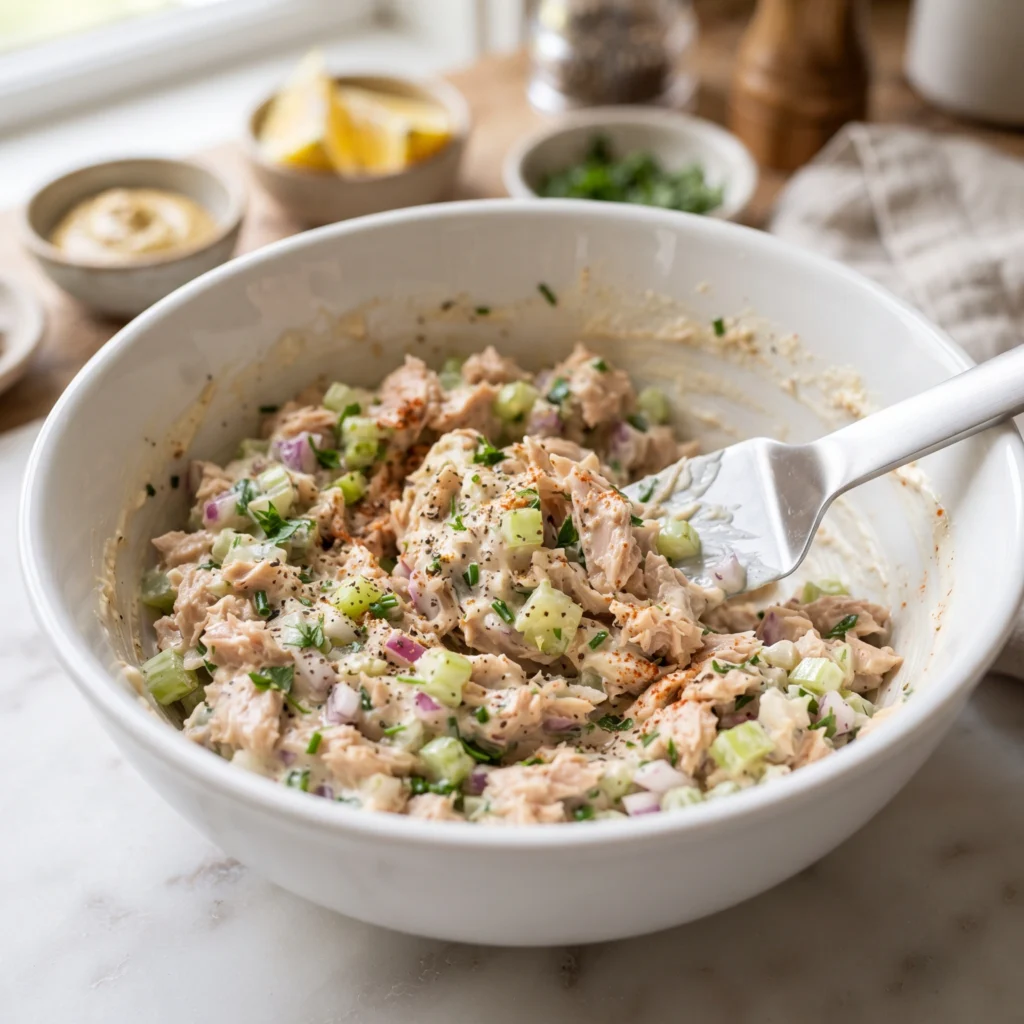
1. Drain the tuna well. Press out as much liquid as possible using a fine mesh strainer or by pressing the lid down into the can — excess liquid waters down the salad and makes it less satisfying.
2. Mix the tuna salad. In a bowl, combine the drained tuna, mayo or yogurt, dijon mustard, lemon juice, celery or onion, salt, and pepper. Stir until well combined.
3. Steam the vegetables. Steam the frozen mixed vegetables according to package instructions, usually about 5 minutes.
4. Prep the rice. If not already cooked, prepare the rice according to package instructions and let it cool slightly.
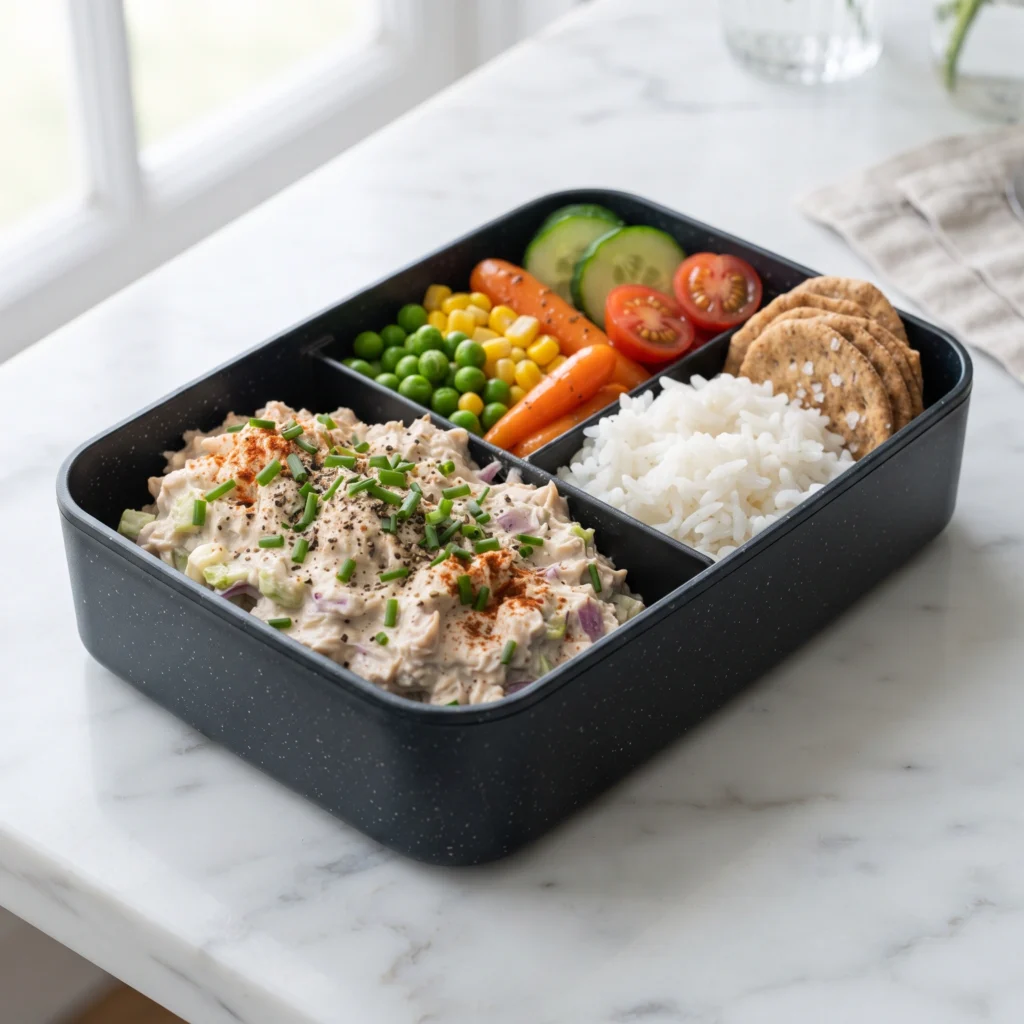
5. Assemble the bento boxes. Divide the rice, tuna salad, steamed vegetables, and sliced cucumber or shredded carrots evenly among four containers. Add crackers or bread on the side if using.
Pro Tips for Getting the Most Out of This Recipe
- Buy tuna in bulk multi-packs when on sale — this is usually the single best way to lower the per-serving cost of this recipe.
- Add an extra squeeze of lemon right before eating, not during mixing, to keep the brightness from fading over a few days in the fridge.
- Keep the tuna salad separate from the rice until eating to prevent the rice from absorbing excess moisture and becoming mushy.
- Use up the vegetable bag fully by portioning exactly what you need each week rather than eyeballing it, which helps stretch a single bag across more meals.
Common Mistakes to Avoid
- Not draining the tuna thoroughly. This is the single biggest reason tuna salad turns out watery and bland instead of rich and flavorful.
- Over-mixing the tuna salad. Stirring too aggressively breaks the tuna down into a paste-like texture rather than keeping some flake and bite.
- Buying pre-made tuna salad instead of mixing your own. Pre-made versions cost significantly more per serving for a product you can easily replicate at home for a fraction of the price.
- Skipping the crunch elements. Plain tuna and mayo without any celery, onion, or pickle can taste flat and one-note.
Storage and Make-Ahead Tips
Tuna salad keeps well in the fridge for up to 3 days in an airtight container — beyond that, the texture and freshness start to decline noticeably. Cooked rice keeps for up to 5 days, and steamed vegetables are best used within 3-4 days.
For the best results, keep the tuna salad, rice, and vegetables in separate containers and assemble the bento box each morning rather than combining everything days in advance.
Serving Suggestions
- As a grab-and-go lunch for the office, requiring no reheating at all
- Scooped onto crackers or bread for a more traditional tuna salad sandwich experience
- With a side of fruit to round out the meal without added cost
- Topped with a few dashes of hot sauce for extra flavor at no additional expense
Variations to Try
- Mediterranean tuna version: Add chopped olives and a splash of olive oil instead of mayo for a different flavor profile.
- Spicy tuna version: Mix in a spoonful of sriracha or chili-garlic sauce for extra heat.
- Curried tuna version: Add a pinch of curry powder and a small handful of raisins for a sweet-savory twist.
- Egg-boosted version: Add a chopped hard-boiled egg into the tuna mixture for extra protein at very little added cost.
Frequently Asked Questions
How much does this bento box cost per serving?
This is typically one of the cheapest options in a meal-prep rotation, often costing well under $2-3 per serving depending on local grocery prices.
Is canned tuna a good source of protein?
Yes — a standard 5-ounce can of tuna provides roughly 25-30 grams of protein for a very low calorie and cost footprint, making it an efficient budget protein choice.
Can I use this tuna salad in something other than a bento box?
Absolutely — it works well in a sandwich, wrapped in a tortilla, stuffed into a pita, or served over a bed of greens.
Is there a concern about mercury in canned tuna if I eat it often?
Light tuna generally has lower mercury levels than albacore or “white” tuna. If you’re eating tuna several times a week, it’s worth looking into current guidance on safe consumption frequency for your specific situation.
Final Thoughts
This tuna bento box is about as low-effort and low-cost as meal prep gets without sacrificing on flavor or satisfaction. A few cans of tuna, a bag of rice, and some frozen vegetables go a long way when you know how to put them together well — proof that a genuinely good work lunch doesn’t have to cost much or take much time to prepare.
Find more in Budget Meals