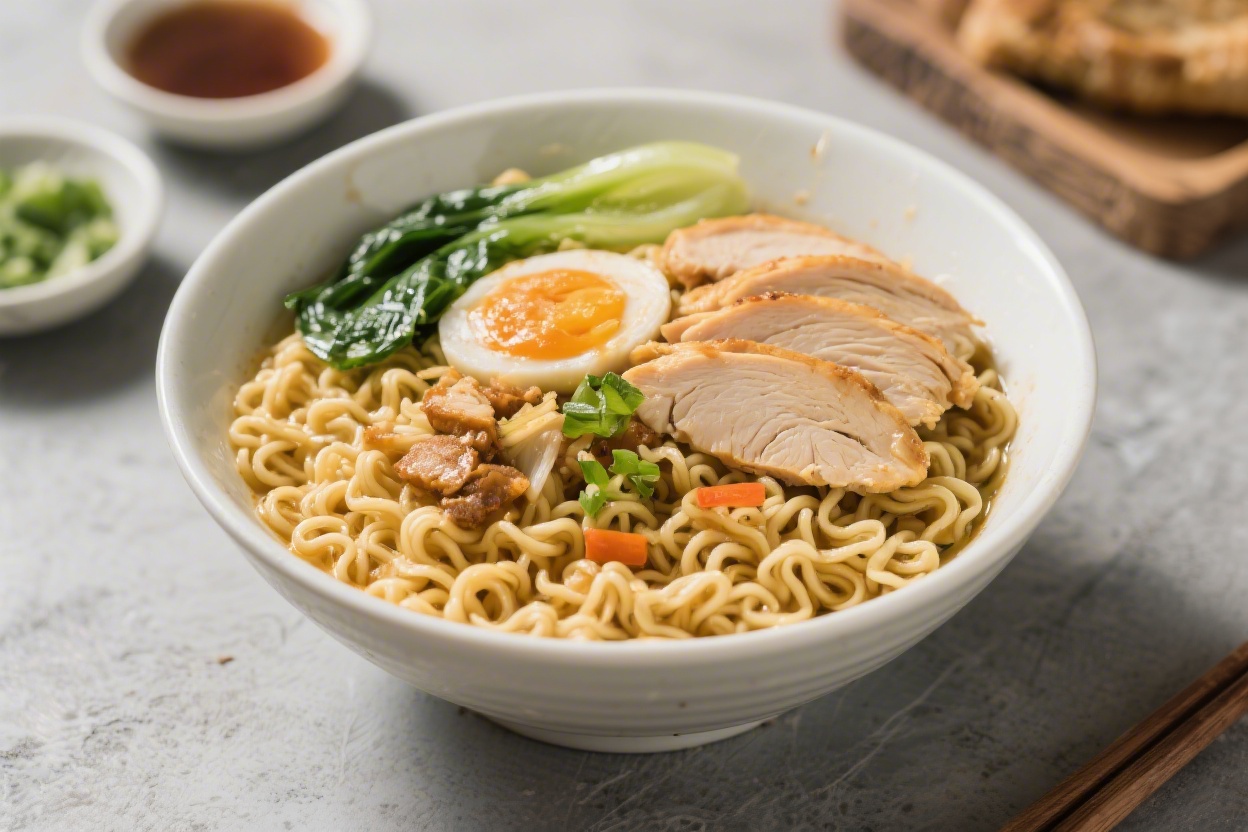
If you’ve got a pack of instant chicken ramen and a few fridge basics, you’re halfway to a real dinner. This upgrade adds protein, veggies, and a richer broth without breaking the bank. It cooks fast, tastes balanced, and feels way more satisfying than plain noodles.
Think silky egg, tender chicken, crisp veggies, and a broth with depth. It’s weeknight-friendly, hangover-friendly, and budget-friendly.
Why This Recipe Works
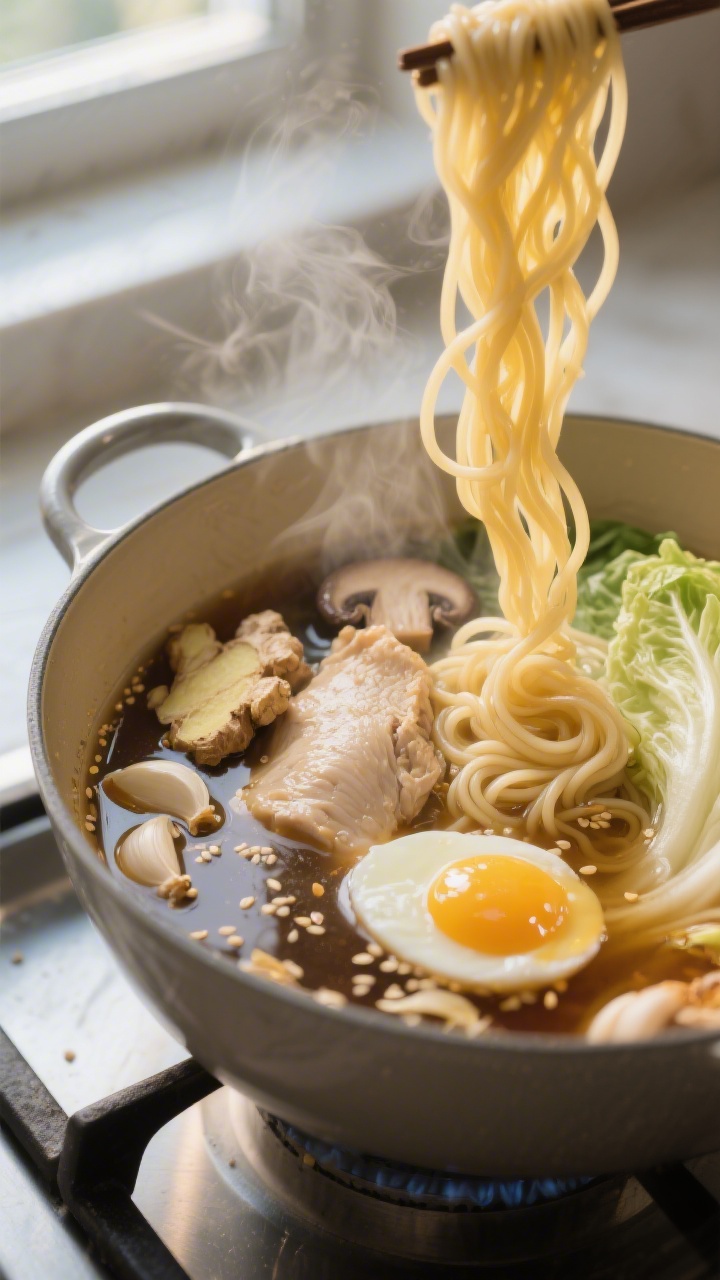
This method layers flavor using simple steps. Sautéed garlic and ginger build a base, while a splash of soy sauce and a touch of sesame oil deepen the broth.
Pre-cooked or rotisserie chicken adds protein without extra time. A quick-cooked egg makes the soup richer and more filling. Fresh veggies brighten the bowl and add texture, so it feels like a meal, not a snack.
Shopping List
- Instant chicken ramen (1–2 packs, including seasoning packet)
- Cooked chicken (1 cup, shredded or diced; rotisserie is perfect)
- Eggs (1–2)
- Garlic (2 cloves, minced)
- Fresh ginger (1-inch piece, minced or grated; or 1/2 tsp ground in a pinch)
- Green onion (2 stalks, sliced)
- Vegetables (1–2 cups total; options: shredded cabbage, spinach, frozen corn, peas, sliced carrots, mushrooms)
- Soy sauce (1–2 tbsp)
- Sesame oil (1 tsp)
- Neutral oil (1 tbsp; canola, vegetable, or olive oil)
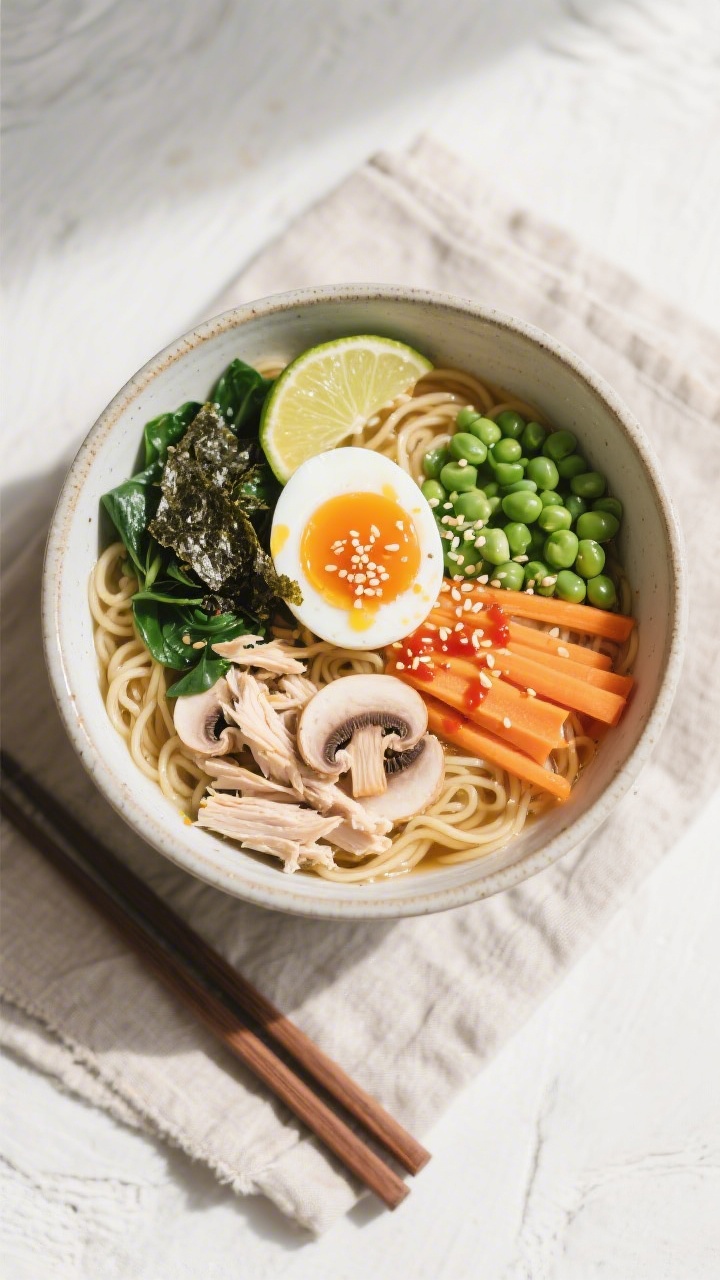
- Optional boosts: chili crisp or sriracha, lime, rice vinegar, toasted sesame seeds, nori strips
Instructions
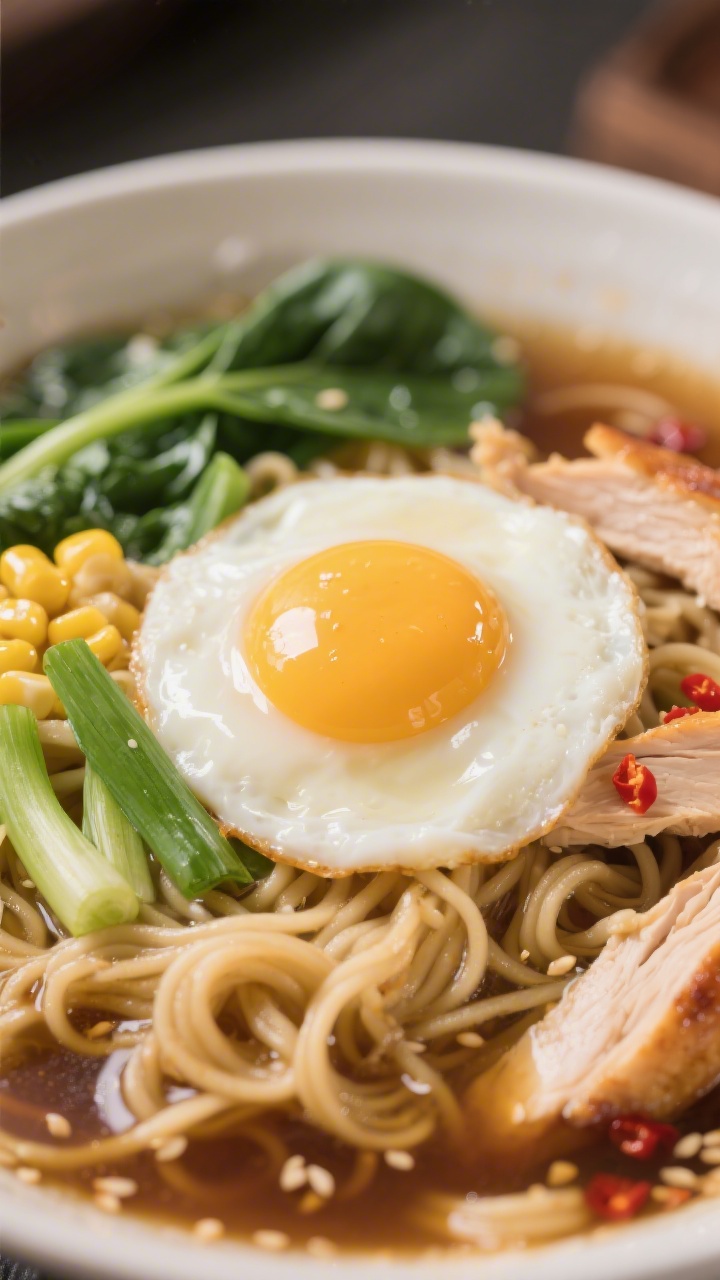
- Prep the add-ins. Mince garlic and ginger.
Slice green onions. Shred or dice chicken. Gather your veggies.
This goes fast once you start cooking.
- Build the base. Heat neutral oil in a medium pot over medium heat. Add garlic and ginger. Cook 30–45 seconds until fragrant, not browned.
- Bloom the flavor packet. Add 2 1/2 cups water to the pot (per pack of ramen).
Sprinkle in half to three-quarters of the seasoning packet and bring to a simmer. This keeps salt in check while still tasting like chicken ramen.
- Add vegetables. Drop in hearty veggies first (carrots, cabbage, mushrooms) and simmer 2–3 minutes. Add quick-cooking veggies (spinach, corn, peas) in the last minute so they stay bright.
- Cook the noodles. Add ramen bricks and cook just until they loosen, about 2 minutes.
Don’t overcook now—they’ll keep softening in the bowl.
- Enrich the broth. Stir in soy sauce to taste (start with 1 tbsp). Add sesame oil. Taste and adjust with a pinch more seasoning packet if needed.
- Add the chicken. Stir in shredded chicken and warm through for 1 minute.
This keeps it tender instead of dry.
- Egg options. Choose one:
- Poached-in-pot: Lower heat to a gentle simmer. Swirl the broth, crack in an egg, and cook 2–3 minutes until whites set.
- Egg ribbon: Beat 1 egg with a pinch of salt. Drizzle slowly into simmering soup while stirring to create silky strands.
- Soft-boiled: Boil an egg separately for 6–7 minutes, peel, and halve.
Place on top when serving.
- Finish and serve. Turn off heat. Top with green onions. Add chili crisp or sriracha if you like heat.
Squeeze a wedge of lime for brightness or add 1 tsp rice vinegar.
Keeping It Fresh
A little freshness goes a long way with instant ramen. A handful of sliced green onions, a squeeze of lime, or a splash of rice vinegar right before serving makes the broth taste cleaner. If you have herbs like cilantro or basil, toss a few leaves on top.
For crunch, add shredded cabbage or bean sprouts at the end. These small touches keep the bowl lively instead of heavy.
Benefits of This Recipe
- Budget-friendly: Uses cheap pantry staples and stretches a single pack of ramen into a full meal.
- Fast: On the table in 15 minutes or less.
- Flexible: Works with whatever vegetables and protein you have.
- Comforting: Savory, steamy, and satisfying without being greasy.
- Balanced: Adds protein, fiber, and flavor so it’s not just carbs and salt.
Common Mistakes to Avoid
- Using the full seasoning packet automatically. Start with half and add more to taste. It’s often salty enough before using it all.
- Overcooking noodles. Pull them when they’re just tender; they’ll soften more in the bowl.
- Skipping aromatics. Garlic and ginger take this from “instant” to “real” with almost no extra cost.
- Boiling the egg too hard. A gentle simmer keeps poached eggs intact and egg ribbons delicate.
- Dumping in all veggies at once. Stagger them so quick-cooking greens don’t turn mushy.
Recipe Variations
- Miso Boost: Stir in 1 tbsp white miso at the end (off heat) for savory depth.
Skip extra salt.
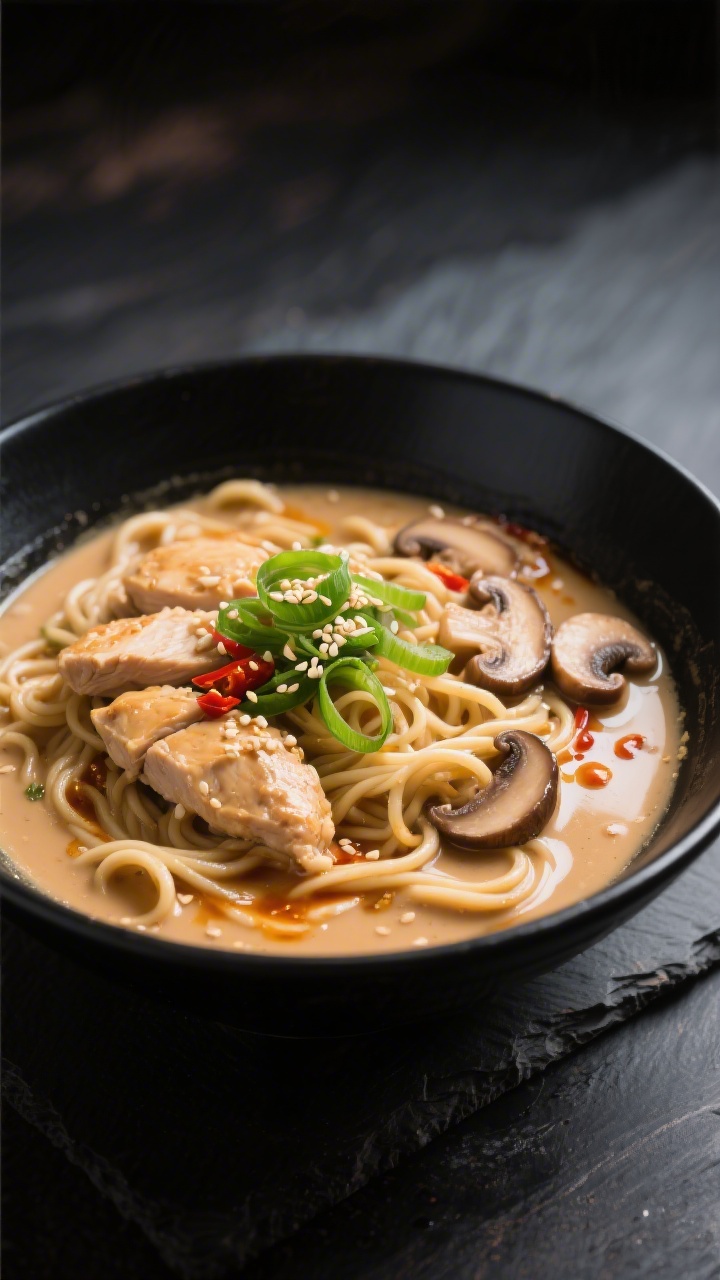
- Peanut-Chili Ramen: Whisk 1 tbsp peanut butter with soy sauce, a little hot water, and chili crisp; stir in at the end for a creamy, spicy broth.
- Lemon-Garlic Chicken: Add lemon zest while sautéing garlic and finish with a big squeeze of lemon and black pepper.
- Greens-Heavy: Load up with spinach, kale (thinly sliced), or bok choy. Add a few mushrooms for umami.
- Brothy to Stir-Fry: Use half the water, cook noodles slightly under, then toss everything in a skillet for a saucy noodle bowl.
- No-Chicken Option: Use the noodles only, swap in vegetable broth, and add tofu cubes or a handful of edamame.
FAQ
Can I use raw chicken instead of cooked?
Yes, but slice it thin and simmer it in the broth for 3–4 minutes until fully cooked before adding noodles. Using cooked or rotisserie chicken is faster and keeps this meal truly quick.
What if I don’t have fresh ginger?
Use 1/2 teaspoon ground ginger or skip it and add a little extra garlic.
A splash of soy sauce and sesame oil will still give the broth depth.
How do I make it less salty?
Use only half the seasoning packet, add more water or low-sodium broth, and lean on aromatics, soy sauce, and a squeeze of lime for flavor. You can also add more vegetables to balance the saltiness.
Can I meal prep this?
Yes—store cooked noodles, broth with chicken/veggies, and toppings separately. Reheat the broth, add noodles, and finish with fresh toppings.
Soft-boiled eggs keep well in the fridge for up to 3 days, peeled and covered.
What’s the best way to reheat leftovers?
Warm the broth gently on the stove and add the noodles at the end to avoid mushiness. If microwaving, heat in short bursts and stir. Add a splash of water if it thickens.
Do I need sesame oil?
No, but it adds a lot of flavor for a small amount.
If you don’t have it, use a bit more soy sauce and a pinch of sugar or a drizzle of chili oil for character.
How can I add more protein cheaply?
Add another egg, toss in a handful of edamame, or use more shredded chicken. A spoon of peanut butter in the broth also adds protein and richness.
Final Thoughts
Instant ramen doesn’t have to be a last-resort meal. With a few smart upgrades—aromatics, veggies, chicken, and an egg—you get a bowl that’s cozy, balanced, and genuinely tasty.
It’s easy to adapt to what you have and how you like it. Keep a couple of ramen packs on hand, and you’ll always have a quick path to a real dinner. Simple, cheap, and very satisfying.
Find more in Budget Meals